
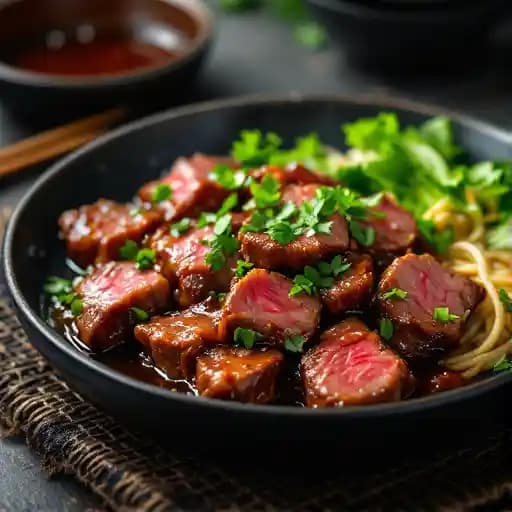
Beef Yakiniku Bento Recipe
Tender beef strips served with a savory Japanese-inspired sauce.
Was this page helpful?
Help improve this recipe for others.
Send this recipe to your inbox.
We'll email it straight to you - plus weekly cooking inspiration.
Ingredients
Some product links may be affiliates. If you buy through them, you're supporting the site and Pekin may earn a commission at no extra cost to you.
Marinated Beef
Yakiniku Sauce (makes extra)
Vegetable & Rice Components
Finishing & Garnish
Method
Marinated Beef
- 1
Slice and prepare beef
Partially freeze the steak for 20–30 minutes to firm it, then slice very thinly (about 1/8 inch) against the grain. Place slices in a shallow bowl or zip-top bag.
- 2
Make marinade
In a small bowl combine 1 tablespoon soy sauce, 1 tablespoon mirin, 1 tablespoon sake, 1 teaspoon brown sugar, grated ginger, grated garlic, 1 teaspoon sesame oil and 1 teaspoon cornstarch. Whisk until the cornstarch dissolves.
- 3
Marinate
Pour the marinade over the beef, massage briefly to coat, then refrigerate for 20–30 minutes (up to 2 hours). The cornstarch helps with a glossy, slightly thickened finish when cooked.
- 4
Cook beef
Heat a large skillet or grill pan over high heat until very hot. Add 1 teaspoon vegetable oil and swirl. Shake off excess marinade from the beef slices and add in a single layer (cook in batches to avoid crowding). Sear 30–60 seconds per side until browned but still tender. Remove cooked beef to a plate and keep warm. If desired, when nearly done add 1–2 tablespoons of the Yakiniku Sauce (see below) to glaze the beef for 10–20 seconds.
Yakiniku Sauce (makes extra)
- 5
Combine 3 tablespoons soy sauce, 2 tablespoons mirin, 1 tablespoon sake, 1 tablespoon brown sugar, 1 teaspoon rice vinegar, grated garlic, grated ginger and 1 teaspoon toasted sesame oil in a small saucepan. If you like heat, whisk in 1 teaspoon gochujang. Bring to a gentle simmer over medium heat, stirring until sugar dissolves. Simmer 1–2 minutes, then remove from heat. Stir in toasted sesame seeds. Taste and adjust: add more sugar for sweetness, soy for saltiness, or vinegar for brightness. Keep warm; this is used for glazing and as a dipping sauce.
- 6
If you prefer a thicker glaze, mix 1/2 teaspoon cornstarch with 1 teaspoon cold water, then return sauce to low heat and stir in slurry until sauce thickens slightly (about 30–60 seconds). Remove from heat.
Vegetable & Rice Components
- 7
Cook rice
Rinse 1 cup short-grain rice under cold water until the rinse runs clear. Drain and add to a small pot with 1.1 cups water. Bring to a boil, then reduce heat to low, cover and simmer 12–15 minutes until water is absorbed. Remove from heat and let rest, covered, 10 minutes. Fluff with a fork and stir in 1 teaspoon butter (optional) and a pinch of salt.
- 8
Prepare vegetables
While rice cooks, thinly slice cucumber and julienne carrot. Toss cucumber and carrot with a pinch of salt and 1 teaspoon rice vinegar if desired to quick-pickle and brighten (let sit 5–10 minutes), then drain excess liquid. Thinly slice green onions and set aside.
- 9
Assemble bento base
Divide cooked rice into bento compartments or bowls. Sprinkle rice with furikake or toasted sesame seeds and a little shredded nori if using.
Finishing & Assembly
- 10
Reheat any beef briefly if needed and toss with a few tablespoons of the warmed Yakiniku Sauce to coat evenly (reserve some sauce on the side for dipping). Arrange the glazed beef over or beside the rice.
- 11
Add the prepared cucumber, carrot, pickled ginger (if using) and a sprinkle of sliced green onions to the bento. Garnish with extra toasted sesame seeds and a drizzle of sesame oil if desired.
- 12
Serve warm. Provide extra Yakiniku Sauce for dipping. Store refrigerated up to 2 days; reheat gently to avoid overcooking the beef.