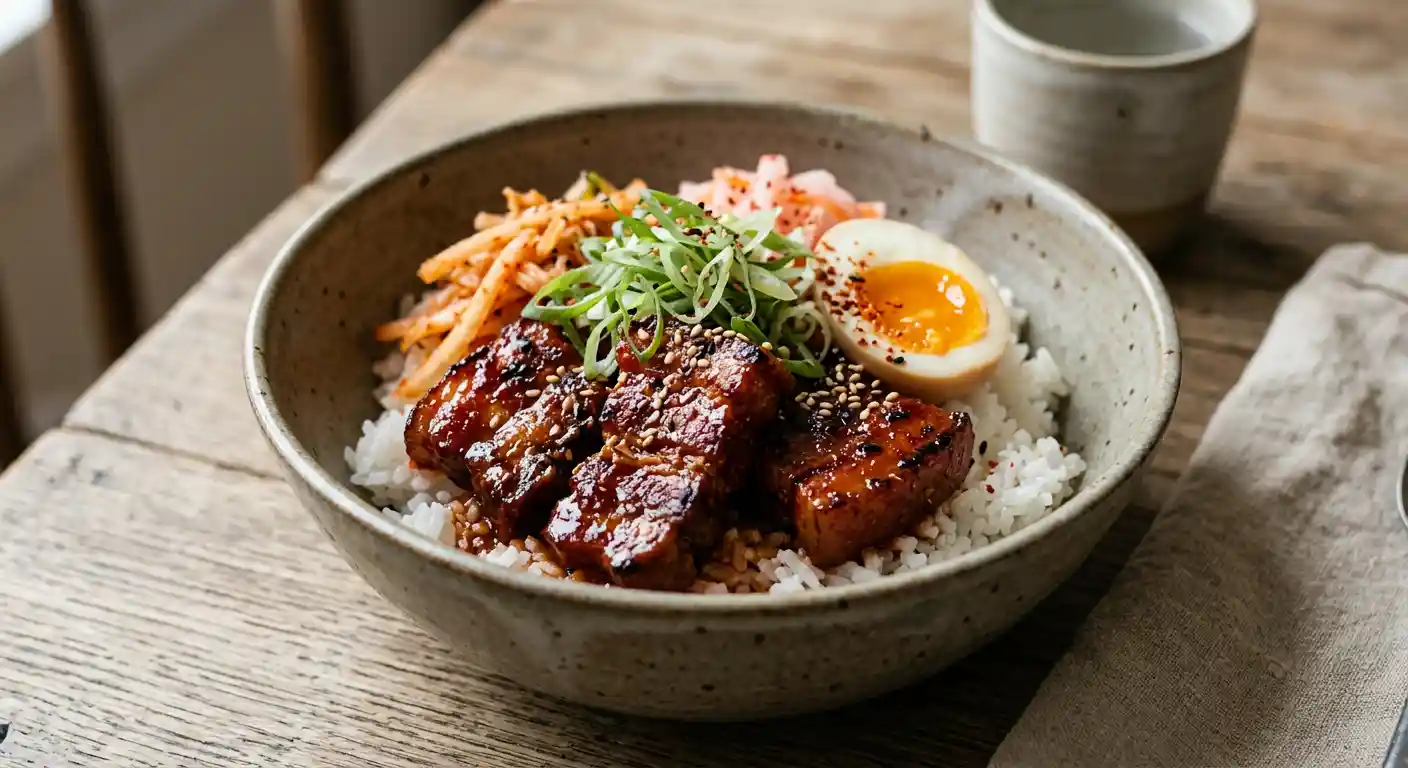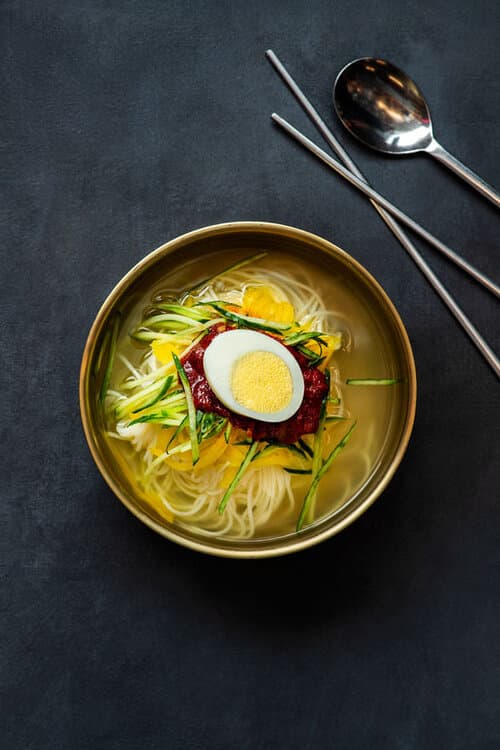
Radish Kimchi Cold Noodles Recipe
Make Radish Kimchi Cold Noodles Recipe in just 30m. Get the full recipe with step-by-step instructions at pekinthechef.com.
Was this page helpful?
Help improve this recipe for others.
Ingredients
Some product links may be affiliates. If you buy through them, you're supporting the site and Pekin may earn a commission at no extra cost to you.
Noodles & Broth
Radish Kimchi & Vegetables
Sauce / Dressing
Garnish & Optional Protein
Method
Noodles & Broth
- 1
Prepare broth
If using store-bought cold dashi or light chicken broth, chill in refrigerator. If making quickly, combine 4 cups light low-sodium chicken broth with 1 cup ice in a pitcher and refrigerate while you cook noodles so it's well chilled.
- 2
Cook noodles
Bring 8 cups water to a rolling boil in a large pot, add 1 tsp kosher salt. Add noodles and cook according to package directions until just tender (usually 3–5 minutes for somyeon, 5–7 for soba). Stir occasionally to prevent sticking.
- 3
Rinse & chill noodles
Drain noodles in a colander and immediately rinse under very cold running water to stop cooking. Toss and rub gently to remove starch. Transfer noodles to an ice bath (bowl of ice water) for 1–2 minutes to chill thoroughly. Drain well and divide into 4 serving bowls or plates.
- 4
Assemble broth
Taste chilled broth and adjust seasoning with salt or a splash more soy sauce or vinegar if needed. Ladle about 1 cup chilled broth (plus a few ice cubes if desired) over the noodles in each bowl just before serving.
Radish Kimchi & Vegetables
- 5
Prepare kkakdugi: Drain excess liquid from the radish kimchi and roughly cut into bite-size pieces if not already. Place about 3/8 cup (roughly 1.5 cups total divided among bowls) of kkakdugi per 4 servings into a small bowl.
- 6
Prep fresh vegetables: If using fresh julienned daikon, lightly salt and squeeze out excess moisture after 5 minutes. Julienne cucumber and thinly slice scallion whites. Arrange 2–3 tablespoons of cucumber and a few pieces of daikon atop each noodle bowl. Scatter 1/2 of the scallion whites across the bowls.
- 7
Sauce / Dressing
- 8
Make the sauce: In a small bowl, whisk together 2 tbsp soy sauce, 1.5 tbsp rice vinegar, 1 tbsp lime juice, 1 tsp gochugaru, 1 tsp gochujang, 1 tsp sugar, 0.5 tsp grated ginger, 0.5 tsp minced garlic, and 1 tsp sesame oil until smooth. Taste and adjust: add a pinch more sugar if too tart, more vinegar for brightness, or extra gochugaru/gochujang for heat.
- 9
Dress the noodles: Spoon about 2 tablespoons of the sauce over each bowl of chilled noodles and kimchi (you can add more to taste). The chilled broth will dilute the sauce slightly; if you prefer stronger flavor, reserve some sauce to drizzle at the table.
Garnish & Optional Protein
- 10
Add protein and final garnishes: Place halved soft-boiled eggs (one half per serving or two halves for more protein), and divide sliced cold chicken or tofu among bowls if using. Sprinkle toasted sesame seeds, remaining sliced scallion greens, and shredded nori over each bowl. Add a pinch of extra gochugaru if desired for color and heat.
- 11
Serve immediately: Offer extra sauce, vinegar, or chili at the table. Eat with chopsticks and a spoon for broth; mix lightly so noodles, kimchi, and sauce combine before each bite.