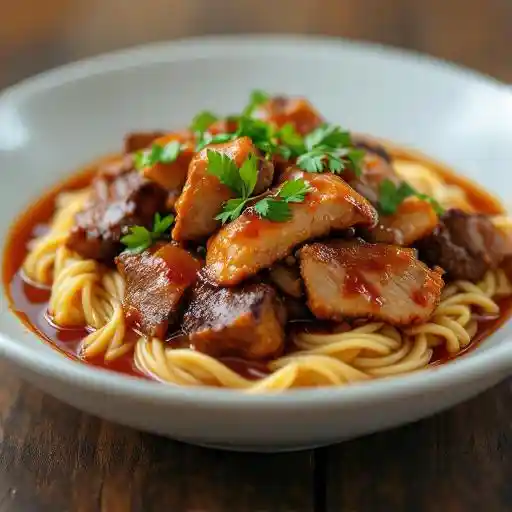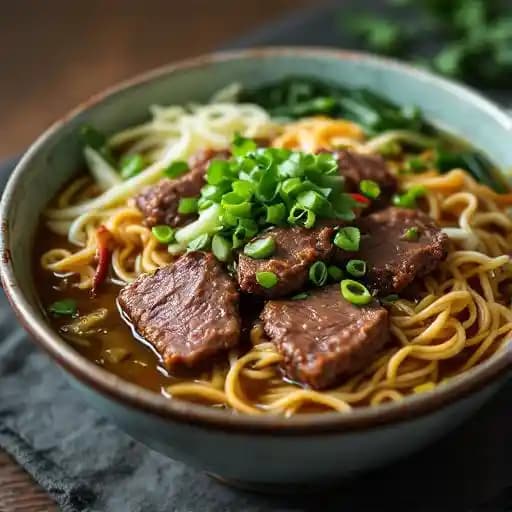
-牛肉麵 / Beef Noodle Soup (shank) Recipe
牛腱, 酸菜, 蔥, 青菜, 麵 Beef Shank, Sour Cabbage, Green Onions, Vegetable, Noodle.
Was this page helpful?
Help improve this recipe for others.
Send this recipe to your inbox.
We'll email it straight to you - plus weekly cooking inspiration.
Ingredients
Some product links may be affiliates. If you buy through them, you're supporting the site and Pekin may earn a commission at no extra cost to you.
Beef & Broth
Sour Cabbage (酸菜) & Aromatics
Noodles & Greens
Condiments & Garnish
Method
Beef & Broth
- 1
Blanch beef
Place the beef shank in a large pot and cover with cold water. Bring to a rolling boil over high heat and boil for 5–8 minutes to remove scum. Drain and discard the blanching water; rinse the beef and clean the pot.
- 2
Start broth
Return the blanched beef to the cleaned pot and add 4 liters of fresh cold water. Add smashed ginger slices, crushed garlic, star anise, cinnamon stick, Sichuan peppercorns (if using), bay leaves, Chinese five-spice, Shaoxing wine, light soy sauce, dark soy sauce and rock sugar. Bring to a gentle simmer over medium heat.
- 3
Simmer
Lower heat to maintain a gentle simmer. Cover partially and simmer for 2 to 2.5 hours, or until the beef shank is tender when pierced with a fork. Skim any foam occasionally. About 30 minutes before the end of cooking, add 1.5 tsp salt (adjust later).
- 4
Finish beef
When beef is tender, transfer the shank to a cutting board and let rest 10 minutes. Strain the broth through a fine-mesh sieve into another pot to remove solids and spices; return broth to low heat and adjust seasoning with salt, light soy sauce or a touch more sugar if needed.
Sour Cabbage (酸菜) & Aromatics
- 5
- 6
Add the rinsed and chopped sour cabbage (suan cai) and stir-fry for 3–5 minutes until it softens and releases aroma. If you like it spicy, stir in 1 teaspoon doubanjiang and fry 1 more minute to bloom the paste.
- 7
Noodles & Greens
- 8
When beef is rested and broth is ready, slice the beef shank against the grain into 0.5 cm thick slices.
- 9
Bring a separate pot of water to a vigorous boil. Add the leafy greens and blanch 20–40 seconds until bright green and just tender. Remove and set aside.
- 10
Cook the noodles in the same boiling water according to package instructions until just tender (fresh: 1–3 minutes; dried: follow package). Drain well.
Assembly & Garnish
- 11
Divide the cooked noodles among 4 bowls. Arrange sliced beef shank on top of each bowl of noodles (about 300 g beef yields roughly 4 servings).
- 12
Ladle very hot strained broth over the noodles and beef, enough to cover (about 400–500 ml per bowl). If you reserved the stir-fried sour cabbage separately, add a generous scoop of it to each bowl; if you infused the broth with it, distribute some pieces into bowls as garnish.
- 13
Place the blanched leafy greens on the side of each bowl and sprinkle sliced green onions (white parts for heat near the hot broth, green parts for fresh garnish) over the soup.
- 14
Finish each bowl with a few drops of sesame oil, a grind of white pepper, and optional chili oil or chili crisp to taste.
- 15
Serve immediately while hot.