
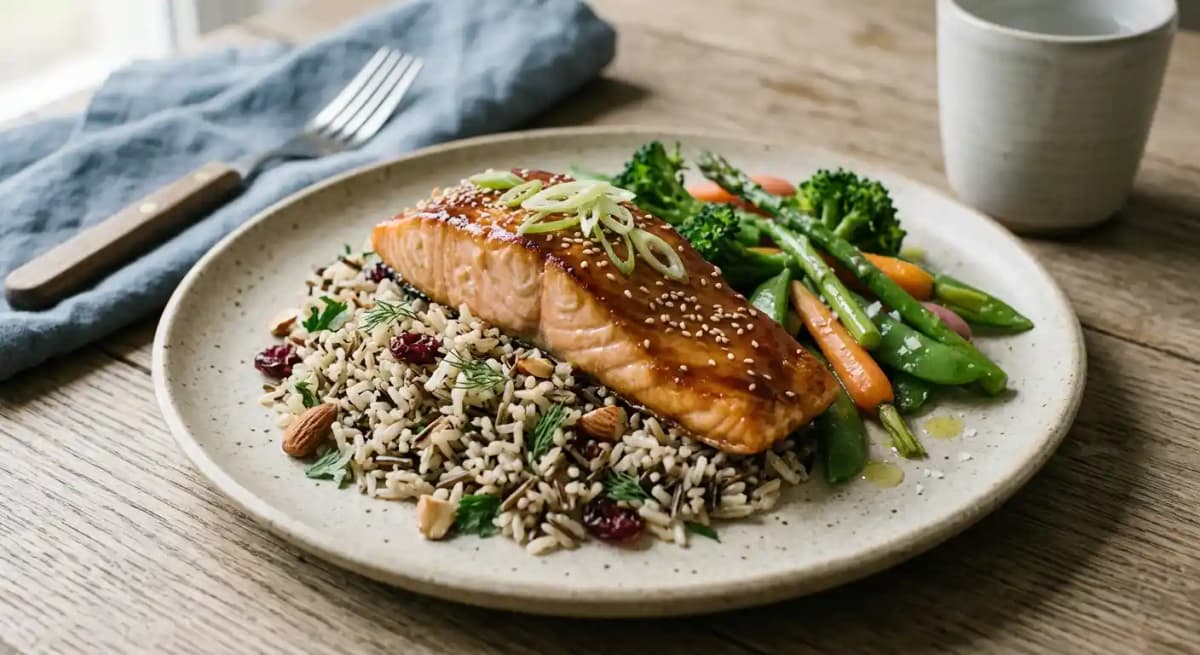
Miso Glazed Salmon Recipe
served with wild rice pilaf, fresh seasonal vegetables
Was this page helpful?
Help improve this recipe for others.
Ingredients
Some product links may be affiliates. If you buy through them, you're supporting the site and Pekin may earn a commission at no extra cost to you.
Miso Glaze & Marinade
Salmon
Wild Rice Pilaf
Seasonal Vegetables
Method
Miso Glaze & Marinade
- 1
Make the glaze
Whisk together white miso paste, mirin, sake, soy sauce, brown sugar, sesame oil, grated ginger, and minced garlic in a small bowl until smooth and homogenous. Taste and adjust sweetness or saltiness: add another 1/2 tablespoon mirin or 1/2 teaspoon sugar if you prefer sweeter, or 1/2 teaspoon soy sauce for more salt.
- 2
Reserve glaze for finishing
Spoon about 2 tablespoons of the glaze into a small container and set aside for glazing after cooking. This ensures you have a fresh, uncooked glaze for finishing if desired. The remaining glaze will be used to marinate and baste the salmon.
Salmon
- 3
Prep salmon
Pat salmon fillets dry with paper towels. Season skin lightly with 1/2 teaspoon salt and 1/4 teaspoon black pepper, rubbing into the flesh and skin.
- 4
Marinate briefly
Place fillets skin-side down in a shallow dish or zip-top bag. Spoon 2 to 3 tablespoons of the miso marinade over the top of the flesh of each fillet (do not cover the skin heavily). Let marinate at room temperature for 15-20 minutes (or refrigerate up to 1 hour).
- 5
Cook salmon (pan-sear then broil method)
Preheat the broiler and position the oven rack 6–8 inches from the heat source. Heat a large oven-safe skillet over medium-high heat and add 1 tablespoon neutral oil. When shimmering, place salmon fillets skin-side down and sear without moving for 3–4 minutes until the skin is crisp and releases easily. Spoon any remaining marinade over the top during the last 30 seconds of searing. Transfer the skillet to the preheated broiler and broil 3–5 minutes, watching closely, until the glaze is caramelized and the salmon is just cooked through (internal temp 125–130°F / 52–54°C for medium). For thicker fillets, allow up to 6 minutes under the broiler.
- 6
Finish and rest
Remove the skillet from the oven. Brush reserved fresh glaze over the tops of the fillets for a glossy finish. Let the salmon rest 2–3 minutes before serving. Garnish with sesame seeds and sliced scallions if desired.
Wild Rice Pilaf
- 7
Toast aromatics and rice
While salmon marinates, heat 1 tablespoon butter or olive oil in a medium saucepan over medium heat. Add finely diced onion, celery, and carrot; cook, stirring, until softened and translucent, about 4–5 minutes. Add the wild rice blend and toast, stirring, for 1–2 minutes until lightly nutty and well coated with fat.
- 8
Simmer rice
Add 2 1/2 cups broth, thyme, 1/2 teaspoon salt, and 1/4 teaspoon black pepper. Bring to a gentle boil, then reduce heat to low, cover, and simmer according to package directions (typically 35–45 minutes) until the rice is tender and most liquid is absorbed. Check at 30 minutes for doneness; add up to 1/4 cup extra hot water or broth if needed.
- 9
Finish pilaf
When cooked, fluff the rice with a fork and stir in remaining 1/2 tablespoon butter or a drizzle of olive oil for sheen. Adjust seasoning to taste with salt and pepper. Keep warm until serving.
Seasonal Vegetables
- 10
Prep vegetables
Trim and lightly peel (if needed) your chosen seasonal vegetables. If using asparagus or broccolini, trim woody ends. For green beans, snap the ends. Pat dry.
- 11
Cook vegetables
Toss the vegetables with 1 tablespoon olive oil, 1/2 teaspoon salt, and 1/4 teaspoon black pepper. Roast in a 425°F (220°C) oven on a rimmed baking sheet for 10–12 minutes until tender-crisp and lightly charred, or sauté in a hot skillet for 5–7 minutes until bright and tender. For quicker steaming: steam 4–6 minutes then toss with oil, salt, pepper and a squeeze of lemon.
- 12
Finish and serve
Taste and adjust seasoning. Plate the vegetables alongside the pilaf and salmon, and serve with lemon wedges for squeezing over the fish and vegetables.